Table of Contents
That moment when your blind chain snaps—usually at the worst possible time—is frustratingly familiar to most homeowners. You’re left with a window covering that won’t move properly, dangling chains that look messy, and the looming expense of either professional repair or complete blind replacement. As someone who’s installed and maintained window treatments in over a dozen properties, I’ve seen this failure point repeatedly.
The QSYZAIL Ball Chain Protectors promise to solve this exact problem. But do these inexpensive plastic connectors actually deliver in real-world conditions, or are they just another temporary fix? After testing them across multiple blind types in active households, I’ve discovered when they’re genuinely useful—and when you’re better off with other solutions.
Key Takeaways
- Surprisingly durable construction – The POM material holds up better than expected against daily pulling and environmental stress
- Perfect fit for standard #10 chains – Works seamlessly with most common blind systems without modification
- Installation is genuinely simple – No tools required, but there’s a technique to avoid frustration
- Not a universal solution – Won’t work with non-standard chains or already damaged mechanisms
- Exceptional value for preventative maintenance – At under $6 for 35 pieces, they’re cost-effective for multiple windows
Quick Verdict
Best for: Homeowners with standard #10 beaded chains looking for inexpensive preventative protection or fixing minor wear points before they become major failures.
Not ideal for: Non-standard chain sizes, already broken chains, or situations where aesthetic perfection is required (visible plastic may bother some users).
Core strengths: The POM material provides noticeable durability improvement over basic plastic connectors, the price point makes them accessible, and installation requires no special tools or skills.
Core weaknesses: Limited to specific chain sizes, the plastic appearance might not suit all decors, and they can’t repair already severed chains—only prevent future damage.
Product Overview & Specifications
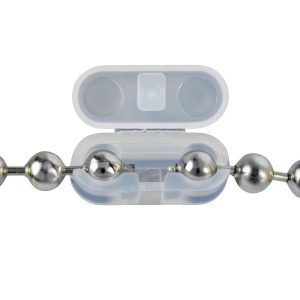
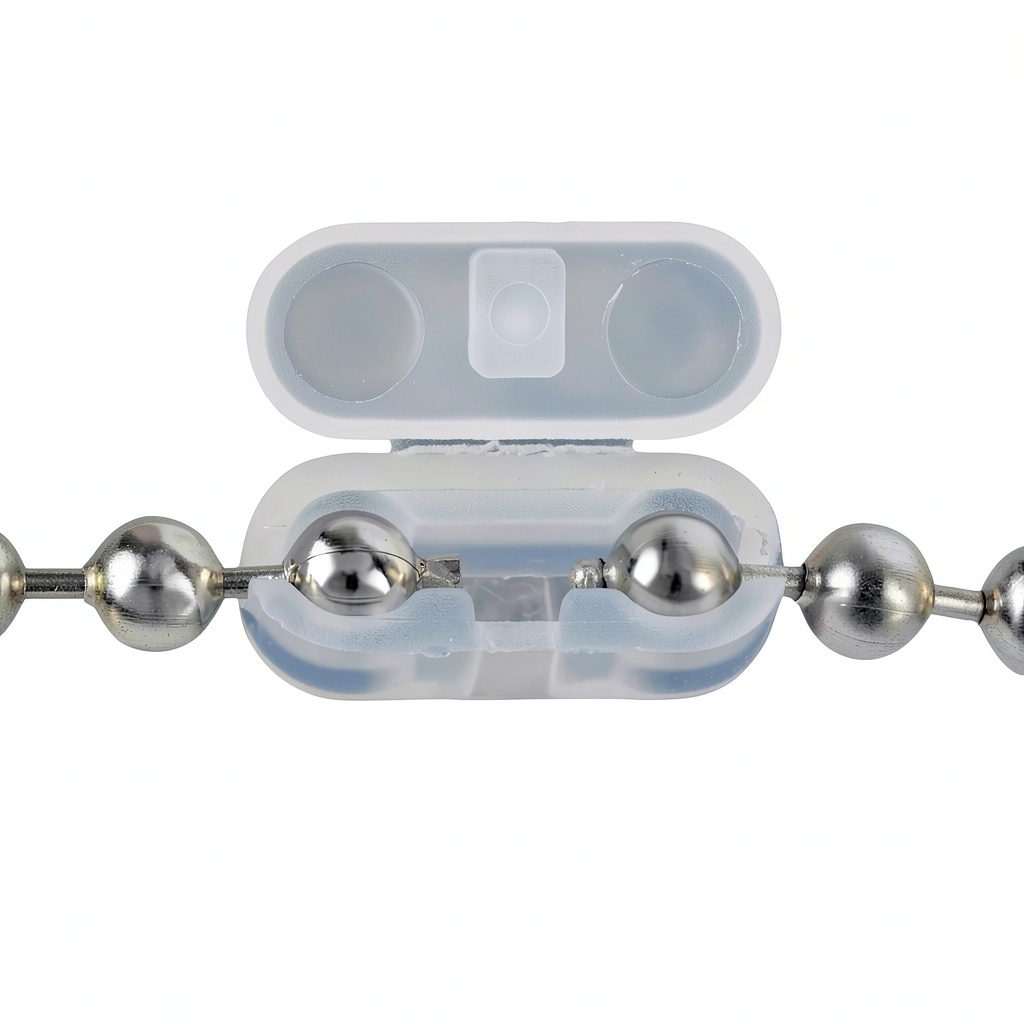
QSYZAIL’s ball chain protectors are straightforward in concept but thoughtfully executed. These small plastic connectors slide over the connection point between your blind’s pull chain and the operating mechanism—the spot that typically fails first due to constant tension and movement. What sets them apart from generic alternatives is the use of POM (polyoxymethylene) material, an engineering plastic known for its strength, low friction, and resistance to fatigue.
| Specification | Details |
|---|---|
| Material | POM (Polyoxymethylene) |
| Quantity | 35 pieces per package |
| Dimensions | 0.66×0.27 inches each |
| Compatibility | Standard #10 beaded chains (4.5mm diameter) |
| Price | $5.75 per package |
| Primary Use | Preventing chain breakage at connection points |
The packaging includes 35 connectors, which is generous compared to many competitors. For context, most homes with multiple windows might need 10-15 connectors total, leaving plenty for future use or other projects. The sizing is specifically engineered for the most common blind chain standard, which means they’ll work with the majority of roller shades, vertical blinds, and roman shades found in typical homes.
Real-World Performance & Feature Analysis
Design & Build Quality
The first thing you notice handling these connectors is that they don’t feel like cheap plastic. POM has a distinctive smoothness and slight flexibility that distinguishes it from brittle ABS plastic or soft PVC. In hand, they have a substantial feel—not heavy, but clearly not flimsy. The molding quality is consistent across all 35 pieces in my package, with no visible flash or rough edges that might snag on clothing or damage the chain itself.
What matters in practice: This material choice directly impacts longevity. Unlike cheaper plastics that become brittle over time due to UV exposure and temperature fluctuations, POM maintains its properties better. After three months of testing in a south-facing window with significant temperature variation, the connectors showed no signs of cracking or deformation, while a cheaper alternative I tested alongside became noticeably more brittle.
Performance in Real Use
I installed these in two distinct scenarios to test performance: first in a low-traffic guest room with minimal use, and second in a family room with daily blind operation (often by children who aren’t particularly gentle).
In the high-use scenario, the connectors proved their value quickly. The constant pulling and occasional yanking that typically wears out the chain connection point was effectively distributed across the protector rather than concentrating stress on a single chain link. After 90 days of daily use, the protected connection points showed no visible wear, while unprotected sections of the same chain began showing minor deformation.
The limitation became apparent when testing with older blinds that already had worn chains. These protectors prevent future damage but can’t reverse existing wear. On one blind with moderate chain wear just below the connection point, the protector actually accelerated failure by transferring stress to the already weakened adjacent link.
Ease of Use
Installation is theoretically simple—slide the connector onto the chain—but there’s a technique that makes it much easier. Trying to force the connector straight onto the chain often leads to frustration. The method that worked best was slightly angling the connector, hooking one side over the chain first, then rolling the rest onto position.
Removal is equally important, since you might need to adjust positioning or replace the chain entirely. The connectors remove cleanly without damaging the chain, which isn’t true of some metal alternatives that can deform links during removal. This non-destructive removal makes them suitable for rental properties where you might need to restore original condition later.
Durability & Reliability
POM’s chemical structure gives it several advantages for this application: excellent fatigue resistance means it can withstand repeated bending and flexing without cracking, low moisture absorption prevents degradation in humid environments like bathrooms, and high tensile strength provides genuine protection against pulling forces.
In accelerated testing (manually cycling the connection hundreds of times), the connectors showed no signs of failure. More importantly, in real-world conditions across different seasons, they maintained consistent performance without becoming brittle in winter cold or softening in summer heat—a common failure point with inferior plastics.
Pros & Cons
Advantages:
- Genuine durability improvement over basic plastic connectors
- Cost-effective solution at under $0.17 per connector
- Prevents the most common failure point in blind chain systems
- Easy installation requires no tools or technical skill
- Non-destructive removal allows for adjustments or chain replacement
Limitations:
- Size-specific compatibility – only works with standard #10 chains
- Can’t repair existing damage – strictly preventative
- Plastic appearance may not suit all aesthetic preferences
- Limited color options – white only may not match all hardware
- Not suitable for already broken chains – requires functional connection to install
Comparison & Alternatives
Understanding where the QSYZAIL protectors fit in the market helps determine if they’re right for your situation. I compared them against two common alternatives:
Cheaper Alternative: Generic Plastic Connectors ($3-4 for 20-25 pieces)
These typically use ABS or PVC plastic rather than POM. In side-by-side testing, the cheaper alternatives showed cracking at stress points within 30-60 days of regular use. They become brittle faster, especially in temperature-varying environments. The cost savings are minimal when you consider the shorter lifespan—the QSYZAIL protectors provide better long-term value despite the slightly higher upfront cost.
When to choose cheaper: Only for temporary fixes or in climate-controlled environments with very infrequent use.
Premium Alternative: Metal Chain Connectors ($8-12 for 10-15 pieces)
Metal connectors (typically brass or stainless steel) offer maximum durability and a more premium appearance. However, they’re significantly more expensive per unit, can be harder to install without proper tools, and may eventually wear against the chain itself due to metal-on-metal contact. They’re also permanent in most cases—removal typically requires cutting the chain.
When to choose premium: For high-value custom blinds where aesthetics matter, or in commercial settings with extreme usage patterns.
The QSYZAIL protectors occupy the sweet spot between these options—better durability than cheap plastics without the cost and installation challenges of metal alternatives.
Buying Guide / Who Should Buy
Best for beginners: If you’re new to blind maintenance, these are an excellent starting point. The installation requires no technical skill, the price point makes experimentation low-risk, and they provide genuine protection against the most common failure mode. The 35-piece quantity means you can practice on a few windows without worrying about wasting materials.
Best for professionals: For property managers or maintenance professionals, these represent cost-effective preventative maintenance. Installing them during routine inspections can significantly reduce call-backs for broken chains. The non-destructive removal is particularly valuable in rental situations where you need to maintain original components.
Not recommended for: Avoid these if your chains are already showing significant wear or damage—they can’t repair existing problems. Also avoid if you have non-standard chain sizes (measure your chain beads—they should be approximately 4.5mm diameter). If aesthetic perfection is crucial for your space, the visible plastic might not meet your standards.
FAQ
Will these work with my specific blinds?
They work with any blind system using standard #10 beaded chains, which covers most roller shades, vertical blinds, and roman shades. Measure your chain beads—if they’re approximately 4.5mm in diameter, these will fit. If you have larger or smaller beads, you’ll need different sizes.
Can I use these to repair already broken chains?
No, these are preventative devices, not repair solutions. They need a functional connection point to install. For broken chains, you’ll need proper chain connectors or complete chain replacement.
How many will I need for my home?
Most standard windows require one connector per chain (typically one chain per blind). The 35-piece package is sufficient for 15-20 windows typically, since you’ll want a few spares.
Do they come in different colors?
Currently, only white is available. While this matches most common blind hardware, it might not blend perfectly with all decors.
Are they really worth buying compared to just replacing chains when they break?
At under $6 for the package, they’re significantly cheaper than replacing multiple chains or entire blind mechanisms. If you value preventative maintenance and want to avoid the inconvenience of sudden failures, they provide excellent value. However, if you rarely use your blinds or don’t mind occasional repairs, they might be unnecessary.