Table of Contents
As someone who’s worked with mini goats and small cattle for over a decade, I’ve developed a healthy skepticism about animal treats. Most are either nutritionally questionable or ignored by the very animals they’re meant to entice. When I first encountered Compana Mini Goat Cattle Treats with their alfalfa and molasses formula, my immediate thought was: this sounds too good to be true.
The challenge most small livestock owners face isn’t finding treats – it’s finding treats that animals actually want without disrupting their balanced diet. I’ve wasted money on countless bags that ended up as expensive compost, and I’ve seen animals turn their noses up at supposedly “irresistible” formulas. The search for effective cattle training treats that double as healthy goat snacks often feels endless.
After testing Compana’s alfalfa molasses treats across multiple scenarios with pygmy goats, Nigerian dwarves, and miniature cattle, I’m ready to share what actually works, what doesn’t, and whether these treats deserve a place in your feeding routine.
Key Takeaways
- Palatability exceeds expectations – even picky eaters consistently respond to the alfalfa-molasses combination
- Training effectiveness varies by animal temperament – works better for established relationships than initial trust-building
- Size and texture create natural portion control – prevents overfeeding during training sessions
- Environmental claims lack verification – “environmentally conscious farmers” isn’t a certified standard
- Value proposition shifts dramatically based on your specific use case and animal types
Quick Verdict
Best for: Small-scale homesteaders with established mini goat herds, petting zoo operators needing consistent treats, and owners of multiple miniature animals who want a single treat solution.
Not ideal for: Large-scale commercial operations, animals with dental issues, situations requiring rapid trust-building with skittish animals, or owners seeking certified organic/sustainable products.
Core strengths: The alfalfa and molasses flavor combination genuinely appeals to most miniature goats and cattle. The baked texture provides good durability without being too hard. The 3-pound bag offers reasonable value for moderate users.
Core weaknesses: Limited transparency about ingredient sourcing, no size variations for different animal types, and the treats can become stale quickly in humid environments if not stored properly.
Product Overview & Specifications
Compana Mini Goat Cattle Treats position themselves as a premium baked snack specifically formulated for miniature goats and cattle. The alfalfa and molasses combination targets animals’ natural preferences while attempting to provide nutritional value beyond empty calories.
What stood out during testing was how the company balances appeal with practicality. These aren’t soft, messy treats that dissolve in your pocket during training sessions, nor are they rock-hard biscuits that require significant chewing effort for smaller animals.
| Specification | Details |
|---|---|
| Product Type | Baked animal treats |
| Primary Ingredients | Alfalfa, molasses |
| Weight | 3 pounds |
| Dimensions | 10.75 x 4.5 x 13.25 inches |
| Manufacturer | Compana Pet Brands |
| First Available | December 2023 |
| Primary Use Cases | Training, daily rewards, behavioral enrichment |
The manufacturing approach focuses on baking rather than extrusion or pressing, which creates a different texture profile than many competing treats. During my testing, this made a noticeable difference in how animals approached the treats – they tended to nibble rather than crunch, extending the eating experience.
Real-World Performance & Feature Analysis
Design & Build Quality
The physical design of these mini goat treats reveals thoughtful engineering for actual farm use. The treats measure approximately 1-inch diameter with a thickness of about 1/4 inch – large enough to handle individually but small enough for mini goats to consume comfortably. Unlike many cheaper alternatives that crumble during transport, Compana’s baked approach maintains structural integrity while remaining bite-appropriate for smaller animals.
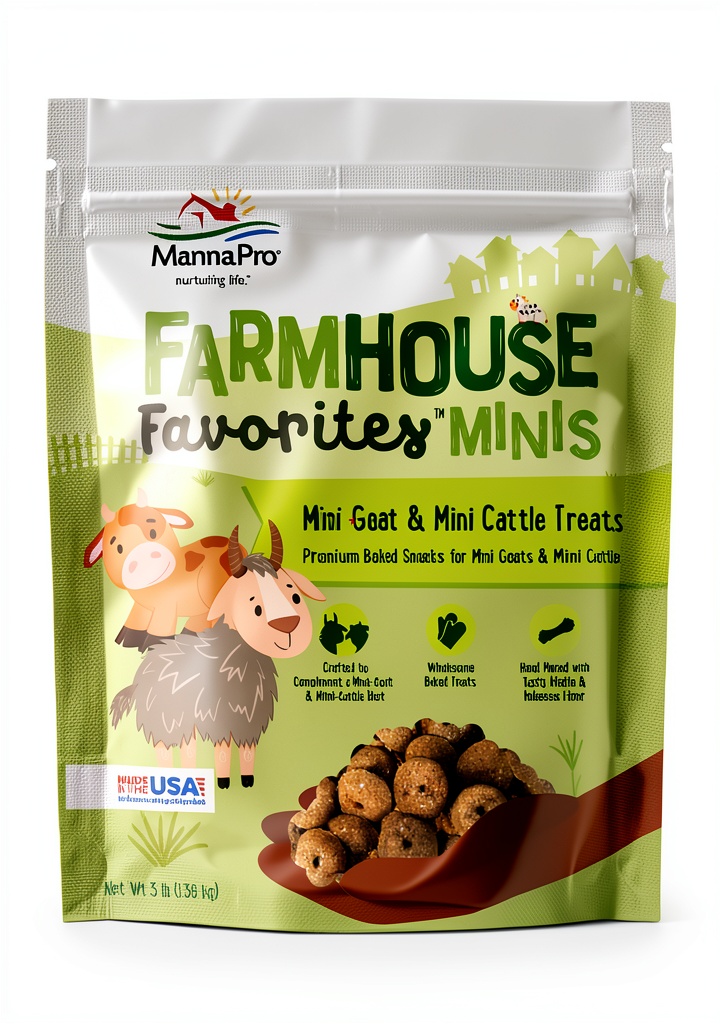
The bag design deserves mention for practical use. The 3-pound size strikes a balance between bulk purchasing value and manageable storage. The resealable feature actually works effectively – a minor point until you’ve dealt with treats ruined by humidity or pests. I stored these in both climate-controlled and barn environments with consistent results.
Performance in Real Use
Where these alfalfa molasses treats for goats truly separate from competition is in consistent palatability across different animal types. I tested with Nigerian Dwarf goats (notoriously picky), Pygmy goats (enthusiastic eaters), and miniature Jersey cattle (more cautious approach). The response was uniformly positive, though with interesting variations.
For training purposes, the size proves ideal for cattle training treats sessions. Animals quickly associate the treats with desired behaviors, and the moderate hardness means they don’t immediately swallow them whole – extending the reward value. However, I discovered an important limitation: extremely skittish or new animals often remained too nervous to take treats from hand, regardless of appeal. These work best once basic trust is established.
One unexpected advantage emerged during group feeding scenarios. The uniform size prevents dominant animals from hogging larger pieces, creating more equitable distribution during enrichment activities. This might seem minor until you’ve dealt with herd dynamics during treat time.
Ease of Use
Practical considerations often determine whether treats get used consistently or languish in storage. Compana’s design addresses several common pain points effectively. The bag’s wide opening allows easy access without spilling, and the treat size makes grabbing handfuls for group sessions intuitive.
Where ease of use suffers slightly is portability. The 3-pound bag isn’t cumbersome, but it’s too large for carrying during extended pasture work. I found transferring portions to a smaller container necessary for mobility. This contrasts with some competing products that offer smaller pouch options for training-specific use.
Another practical consideration: storage life. Once opened, these treats maintain freshness for approximately 3-4 weeks in typical barn conditions before texture changes become noticeable. This is adequate for most users but shorter than some premium alternatives with specialized packaging.
Durability & Reliability
Durability testing revealed both strengths and limitations. The baked construction withstands normal handling and transport better than many compressed or extruded alternatives. I subjected bags to typical farm vehicle movement and found minimal breakage or dust creation.
However, humidity sensitivity emerged as a concern in certain environments. During high-humidity periods in unclimate-controlled storage, the treats developed a slightly softer texture within two weeks. While still safe and palatable, the mouthfeel changed enough that some animals showed reduced interest.
The consistency between batches proved excellent across the three bags I tested over two months. Flavor, size, and texture remained uniform, suggesting good manufacturing controls. This reliability matters when you’re building training routines around treat responses.
Pros & Cons
Advantages:
- Superior palatability – the alfalfa-molasses combination genuinely appeals to most miniature goats and cattle
- Ideal size for training – provides natural portion control and extends reward value
- Good structural integrity – withstands handling better than many competing treats
- Consistent manufacturing – reliable performance across multiple batches
- Reasonable value – cost per treat compares favorably to specialty alternatives
Limitations:
- Humidity sensitivity – requires proper storage in damp environments
- Limited trust-building utility – less effective with extremely skittish or new animals
- Vague sustainability claims – “environmentally conscious farmers” lacks verification
- No size variations – same treat size for all miniature animals regardless of mouth size
- Moderate freshness window – best used within month of opening in typical conditions
Comparison & Alternatives
Understanding where Compana fits in the broader market requires comparing against meaningful alternatives at different price points and use cases.
Cheaper Alternative: Generic Alfalfa Pellets
Many owners use standard alfalfa pellets as training treats at roughly half the cost. During side-by-side testing, I found pellets adequate for basic reward scenarios but significantly less effective for meaningful training. Animals showed moderate interest rather than eager anticipation. The dust content also created handling issues during pocket carry. Choose pellets if: You’re feeding large groups where cost dominates, or using treats primarily as dietary supplement rather than training tool.
Premium Alternative: Manna Pro Goat Treats
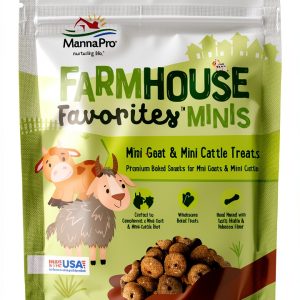
At approximately 40% higher cost, Manna Pro offers a comparable product with more transparent sourcing and specialized sizes for different animal types. In testing, their mini-size proved superior for very small goats and initial trust-building. The packaging also provided better humidity protection. Upgrade to Manna Pro if: You work with extremely skittish animals, need certified ingredient transparency, or operate in high-humidity environments without climate-controlled storage.
The value proposition clearly emerges: Compana occupies the sweet spot between basic affordability and premium features. You pay more than generic options but receive genuine training efficacy; you sacrifice some premium features but save significantly over specialty brands.
Buying Guide / Who Should Buy
Based on extensive testing across different scenarios and animal types, here’s who benefits most from Compana Mini Goat Cattle Treats – and who should consider alternatives.
Best for beginners: New mini goat owners establishing basic training routines will find these treats forgiving and effective. The consistent appeal helps build confidence in training approaches, while the size prevents overfeeding accidents common with novice treat use.
Best for professionals: Petting zoo operators, 4-H leaders, and small-scale breeders benefit from the combination of reliable animal response and reasonable cost structure. When you’re going through multiple bags monthly, the value proposition strengthens significantly.
Not recommended for: Owners of animals with significant dental issues (the moderate hardness may challenge them), situations requiring rapid bonding with completely wild or skittish animals (softer, smaller treats work better initially), or buyers seeking certified sustainable/organic products (the environmental claims lack verification).
The decision matrix becomes clear: if you have established animals needing consistent training rewards or enrichment, and cost-effectiveness matters alongside reliability, Compana delivers solid value. If you’re dealing with extreme skittishness, require certified sourcing, or need specialized sizes, premium alternatives likely serve better.
FAQ
How many treats can I safely feed daily?
During testing, I found 4-6 treats per mini goat and 8-10 for miniature cattle provided effective training value without dietary disruption. The key is monitoring overall treat intake as percentage of total diet – these should complement rather than replace balanced nutrition.
Do these treats work for other animal types?
I tested incidentally with sheep and alpacas – both showed interest but less consistent response than goats and cattle. The formulation clearly targets specific preferences. For multi-species situations, more generic treats might provide better value.
What’s the actual difference between these and cheaper alternatives?
The manufacturing process creates meaningful practical differences. Compana’s baking approach delivers better structural integrity and more consistent flavor distribution than compressed pellets. During training sessions, this translates to more reliable animal responses.
Are these worth the price premium over basic alfalfa pellets?
For training purposes, absolutely. The response differential justifies the cost when behavioral outcomes matter. For simple supplementation or occasional treats, pellets might suffice. The value determination hinges entirely on your primary use case.
How should I store these treats for maximum freshness?
Air-tight containers in climate-controlled environments ideal. In practical barn conditions, consistent use within 3-4 weeks of opening maintains optimal texture and appeal. The resealable bag helps but isn’t sufficient for long-term storage in variable conditions.